Skip to content

The Great Convergence: Eight Insights from Forgepoint’s 2026 Global Summit and Advisory Council Meeting

Casilda Angulo

November 23, 2026

  • Blog Post

When a handful of attackers can use open-source AI agents to target thousands of organizations at once, can AI-enabled defenders still have the edge?

How should enterprises govern AI agents they can’t see, including those their vendors use?

As AI disrupts entry-level work, how can the security industry support the next generation of talent?

As AI makes security the top priority for enterprise spend, will 2027 bring the liquidity the cyber market has been waiting for?

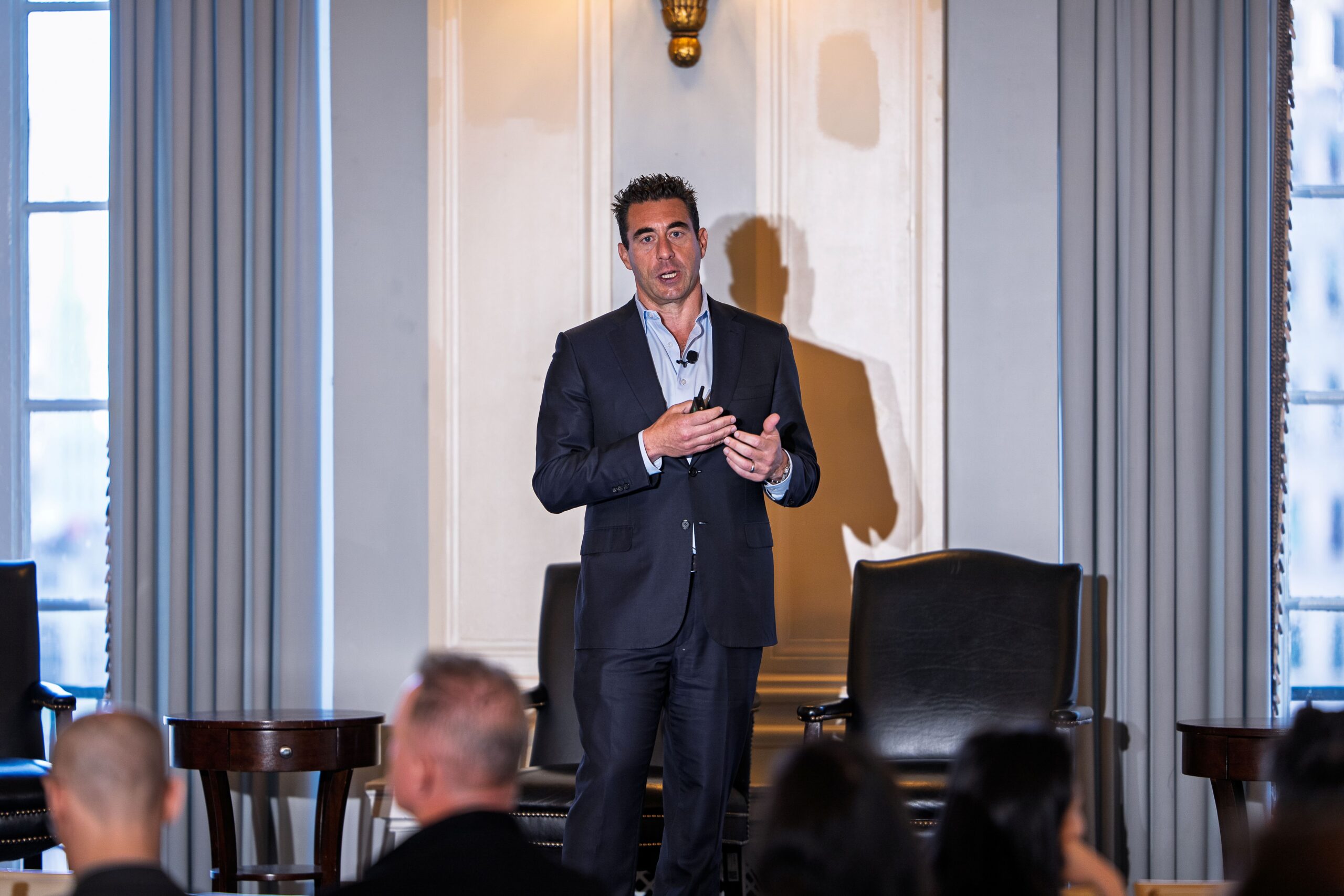
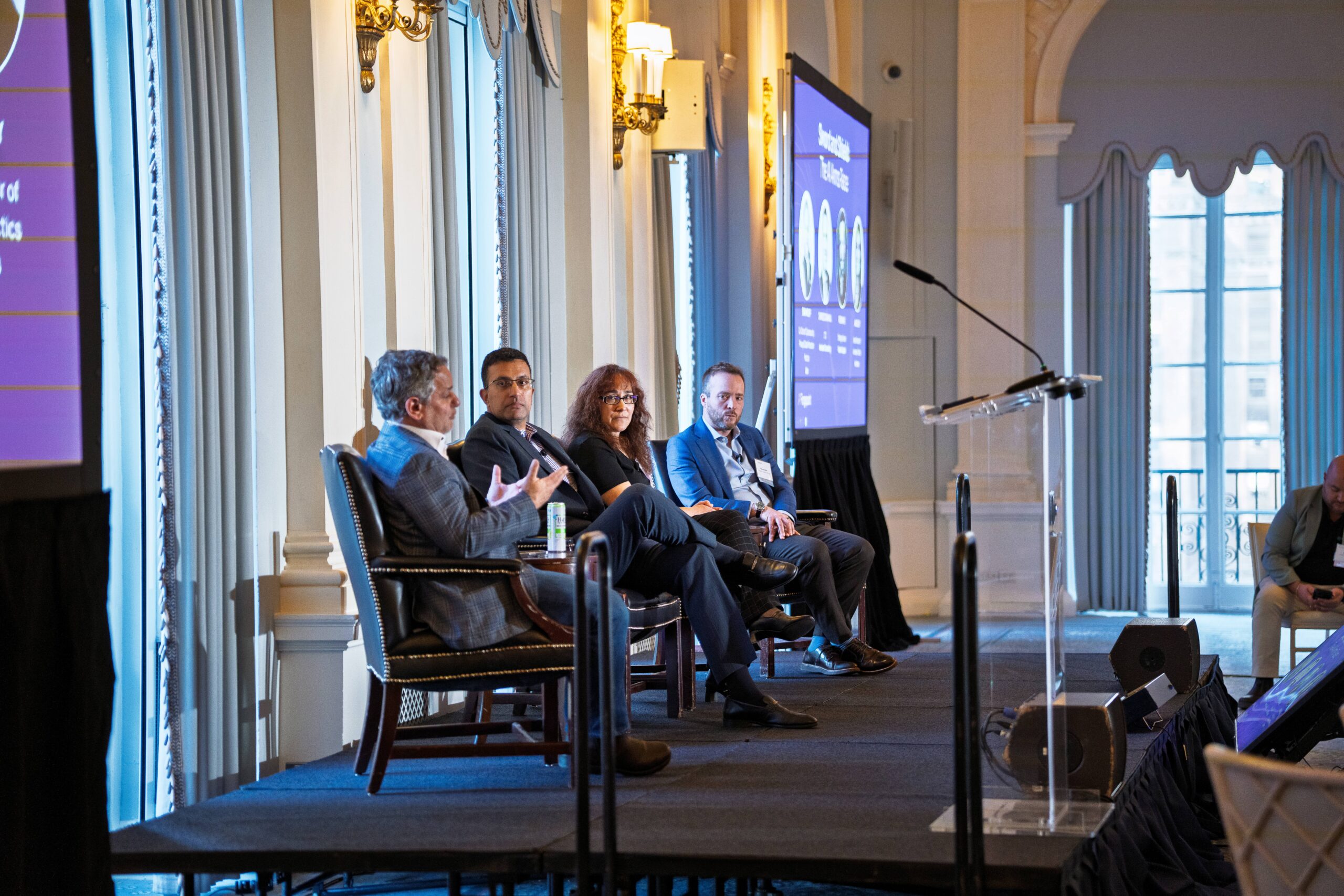
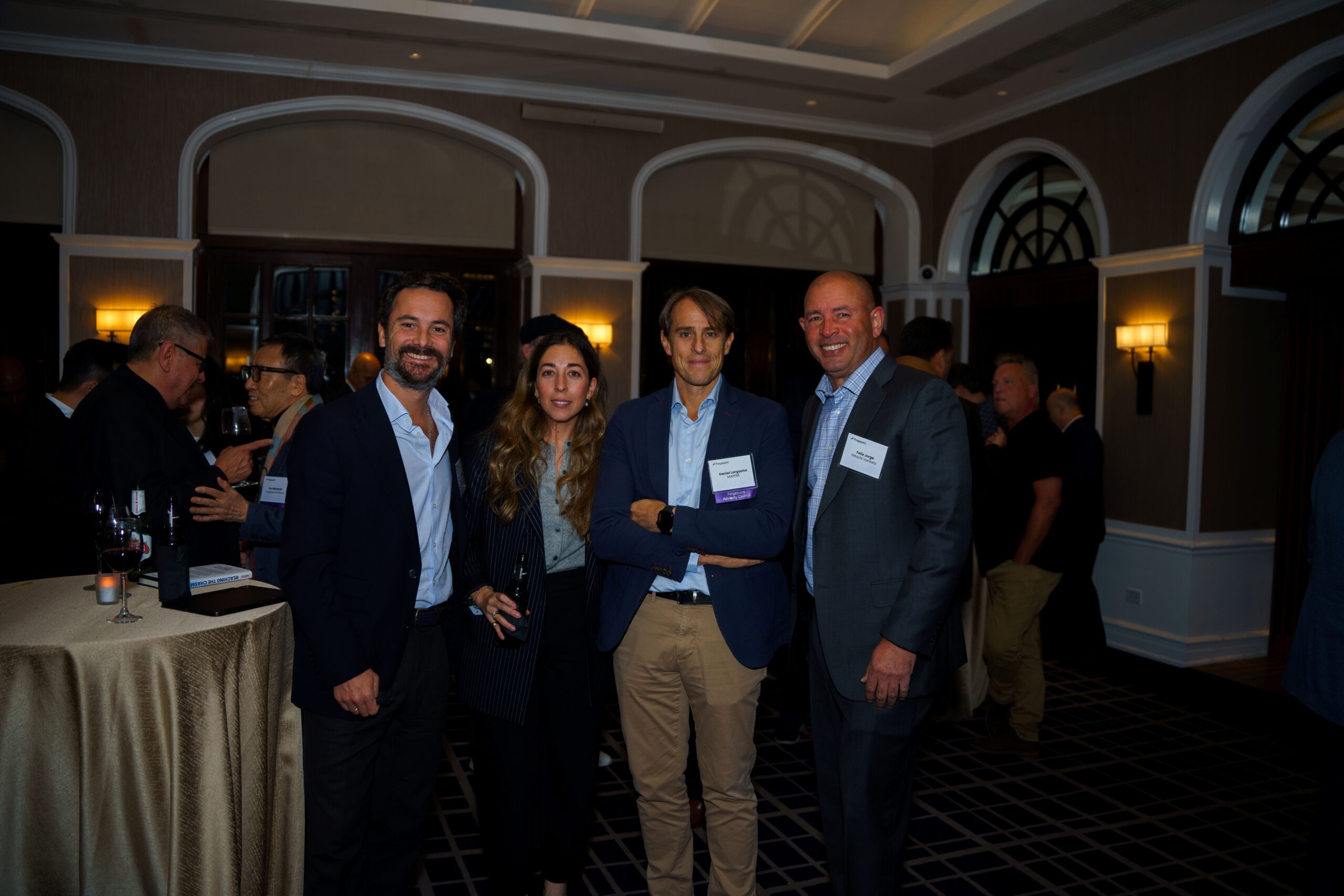
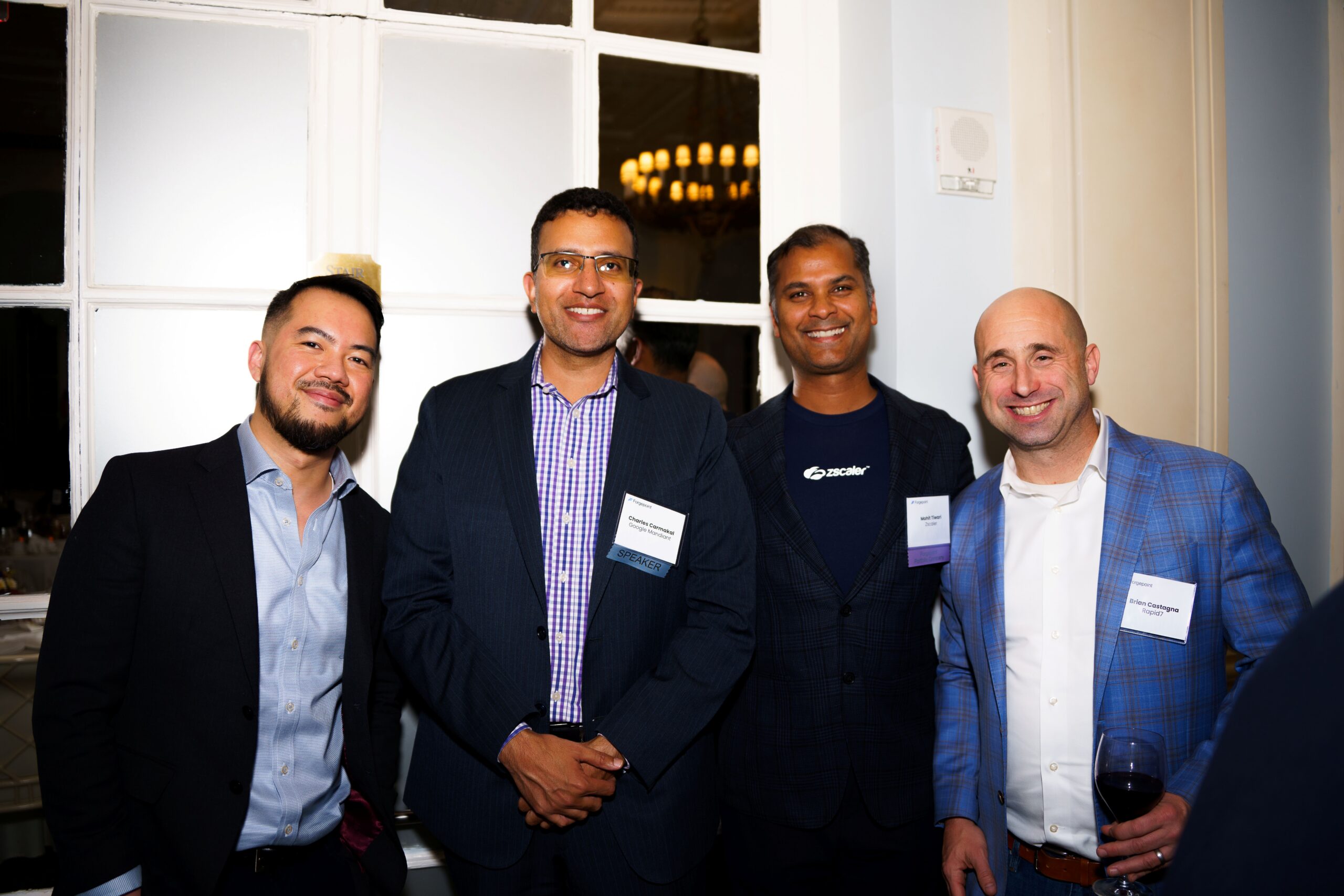
These and other emerging questions were up for debate at Forgepoint’s 2026 Global Summit and Advisory Council Meeting, held at the Yale Club in New York City on November 10. Our annual invitation-only summit brought together the Forgepoint community around this year’s theme, “The Great Convergence: The Criticality of Cyber in a Nascent Agentic World.”

We were pleased to gather with 160+ portfolio company CEOs and founders, co-investors, go-to-market partners, law enforcement officials, and technology leaders from government, academia, and top global enterprises including Nvidia, Anthropic, AIG, and Santander. Throughout an afternoon and evening of keynotes, panels, fireside chats, networking, cocktails, and dinner, our community discussed the most pressing issues in cybersecurity, AI, and infrastructure software.

Here are the top eight takeaways from the summit.

1) As agentic attacks surge, security fundamentals are paramount

Agentic attacks have accelerated dramatically in recent weeks. Small teams of one to five attackers are using open-source agentic frameworks and leveraging automation to target thousands of organizations, often plugging stolen LLM API credentials into automated hacking tools to attack at scale. Once inside, they can reach domain administrator access within hours.

These are fast and high-volume attacks, but they are also noisy, unsophisticated, and often careless. They attempt to exploit the same basic gaps security teams have been aware of for years, including vulnerabilities with patches that have been available for months, and agents can only act within the permissions they find. Security fundamentals remain the best defense against agentic attacks: hygiene, asset inventory, privilege management, patching, and removing exposed credentials and API keys matter more than ever.

Prepared defenders are well positioned to stop agentic attacks, but most organizations under-invest in hardening and prevention. More broadly, the industry also lacks incentives for teams to patch and reduce attack surfaces at scale. These shortfalls leave the door open for attackers. Meanwhile, AI is surfacing vulnerabilities faster than teams can fix them, complicating triage and remediation and widening the gaps agentic attackers exploit.

The attack surge is straining response capacity, too. Many incident response firms are so stretched that they can only support clients who already have retainers in place. This is making prevention all the more valuable, because help may not be available when an attack lands.

2) Defenders have the edge, but only if they pair AI with context and expertise

AI can help defenders more than attackers because of two structural advantages. First, defenders have access to the same AI tools as attackers, plus commercial AI security products. Second, defenders know their own environments better than threat actors.

However, this advantage only holds up if defenders combine AI use with context and expertise. Context means grounding AI in what defenders already know: security teams should continue to use deterministic tools for what they do well and let AI reason over the results. Expertise means supervising AI like a junior colleague that requires expert feedback and oversight. For example, AI can speed up analysis and triage for defenders, but subject matter experts need to stay in the loop to reach the right conclusions.

Even when defenders use AI effectively, the defensive edge isn’t guaranteed. The sheer volume of agentic attacks is asymmetric, and some defenders warn that security automation alone can’t keep pace. Looking ahead, expect to see attackers’ AI-enabled capabilities grow dramatically in the next 12 months, while security teams significantly improve agentic defense.

3) To move AI from pilot to production, every agent needs an identity, an owner, and an off switch

AI adoption is running well ahead of security tooling. Many organizations can’t see what agents are doing in their environments, and third-party agents are a major blind spot. Organizations should ask vendors, including AI providers, for agentic traces. These records of what an agent did and why are becoming a key new form of threat intelligence.

Insurers are adding pressure by evaluating whether organizations keep an inventory of all agents, including third-party and embedded ones. To satisfy underwriters, enterprise leaders need to ensure each agent has an identity, limited permissions, and a responsible owner, along with monitoring and the ability to shut it down.

Security tooling for agents is often familiar because agents amplify existing risks. Many of the security controls that enable agent discovery, detection, response, and threat hunting are the same ones that companies use for network security. Guardrails built into models are important but don’t replace these foundational controls, and governance of what agents can do should sit outside of the agent itself.

None of this works without identity security. Telling humans, machines, and agents apart is one of the central security challenges ahead.

4) AI is creating new legal and regulatory exposure

Some of the costliest AI incidents are self-inflicted. Misconfigured AI and unsanctioned “shadow AI” are causing incidents that can trigger disclosure obligations and litigation.

Regardless of the cause of an incident, AI is also speeding up the legal fallout. Plaintiffs’ firms are using AI to find affected individuals and assemble class actions in days rather than weeks, compounding exposure for companies that are themselves victims of a crime.

Regulated industries face pressure on both sides as they race to deploy AI for efficiency while regulators demand human-in-the-loop guardrails. Engaging regulators early on helps get ahead of potential friction, but the broader picture of regulation and liability remains unsettled. There is still no clear model for regulating adaptive, AI-driven threats. Until there is, legal and security teams will shift their focus from incident response to governance and controls. Expect to see AI governance continue to mature as a discipline.

5) Keep humans at the center of AI adoption and protect the talent pipeline

If everyone on offense and defense uses AI, the technology levels out and people become the differentiator. Leaders should think about AI as a reason to invest in their teams and keep the human element at the center of this new paradigm.

The talent pipeline comes first. Cybersecurity has long faced a talent shortage, and over-deploying AI on entry-level work could leave the next generation without a way into the field. Universities and employers need to adapt how they train new talent. For example, the skills mix is shifting for cyber practitioners, so the field will need risk engineers alongside risk managers.

Zooming out, returns on AI adoption are real but uneven across the security industry. The clearest efficiency gains so far are in software development, though the large cost savings many expected have yet to materialize. Where AI does deliver, teams embrace it when it frees their time for higher-value work.

Given the persistent cyber talent shortage and rising burnout, AI automation needs to carry more of the load. Training and clear communication matter, and humans must stay in the loop on critical decisions. At the end of the day, AI won’t replace people, but the security professionals who use it well will replace those who don’t.

6) Security markets are strong and 2027 is shaping up to be a year of liquidity

AI has made security the top priority for incremental enterprise spend, but the cyber market is not uniform. Cybersecurity now has three markets that are moving in different directions simultaneously. The large, stable public market is posting a strong performance, early-stage valuations are at record highs, and late-stage private and PE-owned companies lag.

Public cybersecurity stocks are outperforming the broader market- up around 40% year over year compared to 14% for the S&P 500- and leading security players including Palo Alto Networks, CrowdStrike, and Fortinet are pulling ahead. Enterprise acquirers from adjacent software, data, and infrastructure markets all want a share of the security budget. Identity remains a top priority for acquirers, with machine identity drawing particular interest.

At the early stage, valuations have never been higher. Investors are eager to back AI-driven security companies they see as future winners. For founders building great cyber companies, the capital is there to scale.

Late-stage private and PE-owned companies face a different reality. Their valuations no longer track public comparables, and growing pressure to return capital points to a much more active cyber market in the near term. Expect more M&A, IPOs, continuation vehicles, and creative mergers in 2027 as investors look for liquidity.


7) Focus wins in a crowded, AI-everything market

Many cybersecurity market stakeholders believe there is an AI security bubble driven by an overcrowded market even as real opportunities to deliver value remain. Buyers are overwhelmed by tools, boards are questioning security spend and vendor count, and startups struggle to stand out to prospects and investors.

CISOs should clean up their existing tool sprawl before adding more. When evaluating new vendors, security platforms that deliver tangible outcomes offer a winning proposition over point products amidst scrutiny over security spending, especially for mid-market and smaller buyers.

Startups can stand out by taking a clear stand on what they believe and explaining why they do what they do, rather than leading with their AI capabilities. Less is more: focus on one ideal customer profile and deliver consistent value. This can improve gross retention, which is one of the strongest predictors of a company’s long-term health. Domain expertise also sets teams apart. Buyers and investors want to see proven practitioners behind the product; vibe-coded security tools won’t earn their trust.

The bar only rises as startups scale. Becoming AI-native across the whole company, not just in engineering, is now the expectation for companies on the path to IPO.

8) U.S. law enforcement agencies are collaborating with private industry to disrupt adversaries

Cyber is becoming a key pillar of U.S. law enforcement and national security. In September, the FBI released its first agency-wide, unclassified cyber strategy built on four priorities: investigating, disrupting and imposing costs on cyber adversaries; supporting victims; increasing impact through partnerships; and enhancing the FBI’s own cyber capabilities, including AI-enabled tools. Recent international operations like Operation Riptide have led to multiple arrests and disrupted adversary infrastructure, tools, and funding.

Public-private collaboration remains essential. The most effective operations combine government action upstream with private companies taking action on their own platforms. Organizations and local FBI field offices should prioritize open communication when incidents occur to disrupt attackers.

Conclusion

As AI changes the speed and scale of security, the fundamentals matter more than ever: hygiene, human judgment, and partnership across industry and government.

It’s an exciting time for security practitioners, leaders, builders, and investors. We are at the center of the AI revolution, and cybersecurity is a team sport. We feel privileged and honored to collaborate with our trusted network of global leaders to protect the digital future.

Thank you to everyone in the Forgepoint community who gathered to chart a path forward together. We look forward to continuing the conversation and collaboration in 2027. The mission continues.

Awards

We were proud to recognize two leaders from our community at this year’s dinner. Congratulations to Hazel Díez Castaño, recipient of the Trailblazer Award, and Evan Wolff, recipient of the Catalyst Award.

With Appreciation

A special thank you to our summit speakers, panelists, presenters, and guests, and to our portfolio companies Kindo, Discern Security, Hackuity, and Hadrian for presenting in our innovation showcase.

  • Dr. Ed Amoroso, CEO and Founder, TAG Infosphere
  • Rob Bair, Head of Industry Transformation, Anthropic
  • Anthony Belfiore, COO, Wiz (acq. Google)
  • Charles Carmakal, Chief Technology Officer, Google Mandiant
  • Hazel Díez Castaño, Global Chief Information Security Officer and Global Head of Fraud and Financial Crime, Santander
  • Rogier Fischer, CEO and Co-founder, Hadrian
  • Tracie Grella, Global Head of Cyber Risk Insurance, AIG
  • Kyle Hanslovan, CEO and Co-founder, Huntress
  • Rob Knake, Strategic Advisor, Paladin Capital Group
  • Brett Leatherman, Operations Director, FBI Cyber
  • Jamie Levy, Senior Director of Adversary Tactics, Huntress
  • Pierre Samson, Chief Strategy Officer and Co-founder, Hackuity
  • Sai Venkataraman, CEO and Co-founder, Discern Security
  • Brian White, Managing Director and Co-Head of Technology Investment Banking, Piper Sandler
  • Ron Williams, CEO and Founder, Kindo
  • Evan Wolff, Co-Chair, Cybersecurity, Privacy and Data Protection Practice, Akin
  • Saša Zdjelar, Chief Security Officer and Head of Product Security, Nvidia

With Alberto Yépez, Ernie Bio, Leo Casusol, and the Forgepoint team.

Casilda Angulo is a Vice President at Forgepoint Capital, where she focuses on critical emerging technologies including AI security, identity, SaaS security, and financial fraud and risk. She is a Board Observer for Lynx, Nudge Security, and SPHERE, and has helped shape Forgepoint’s AI security investment thesis and its expansion across Europe, the UK, and Latin America.